Network School: The Honest Review
Every question worth asking before you apply: cost, visas, the winter, and what a month in Astana, Kazakhstan actually involves, including the parts that won't suit everyone.
Check your NS Compatibility
Network School is an intense, focused place to live and work. Take this brutally honest 10-question compatibility test to see whether you'd thrive at Network School or should look elsewhere.
Frequently asked questions
83 questions answered from firsthand experience
Network School (NS) is a startup society: founders, remote workers, researchers and content creators live in one place and build together. The model is known as Society-as-a-Service. It runs in Astana, Kazakhstan. Three things are bundled: learning technology, working remotely alongside people doing the same, and training hard. It is not a school in the credential sense. There are no grades and no degree at the end. Think of a live-in community with a calendar of optional sessions. You don't enrol in a course.
Open full page →Yes, in the sense that matters for a paying member: it is a real, operating organisation with a physical campus, not an online scheme. It was founded by Balaji Srinivasan, a former chief technology officer of Coinbase. In Kazakhstan it operates under a five-year memorandum of understanding with the Ministry of Artificial Intelligence and Digital Development, signed by the Deputy Prime Minister, and the Astana campus opened on 2 September 2026 at a launch attended by government officials. It is based at Astana Hub, the national technology park. It is not an accredited school, and there is no degree. The refund policy isn't in writing yet, so get the cancellation terms in writing before you pay. Apply only through ns.com or a link that forwards there.
Open full page →Membership starts at $900/month. That entry price bundles your room, meals, gym access and 24/7 coworking, so compare it with rent plus food plus a gym plus a desk in your own city. Compared with rent alone, it looks expensive. Prices for larger or private rooms aren't on the price list yet, so ask what the entry price gets you when you apply. Budget separately for flights, your visa, insurance and anything you do in the city on weekends. Applying through the referral link on this site gets you your first week free.
Open full page →Yes. Applying through the referral link on this site gets you your first week free, and your application gets priority review, which moves you up the queue. There's no discount code to enter; the benefit comes from applying through the link. If you're weighing the cost, compare the bundle: room, meals, gym and coworking in one number. Pricing can change between cohorts, so go by what you're quoted when you apply, not by any third-party page, this one included.
Open full page →The membership covers your room, three meals a day, gym access, 24/7 coworking, wifi, guest speakers, community events, workshops, fitness classes, tech tutorials, a content studio and introductions to employers. A tech school for startups is part of the package too. The idea is one price for everything you need to live and work, so you aren't building a life from scratch in a new city. That goes down to details like your phone plan, so you can work from day one, and you're introduced to the local tech community when you arrive. The main thing to confirm in writing before you pay is which room type the entry price gets you.
Open full page →Cohorts run monthly, so the natural unit is one month. That's long enough to settle in and short enough to leave if it isn't for you. Plenty of people extend month by month, and some use it as a base for much longer. If you're unsure, come for one cohort before rearranging your life around it. On a long stay, your visa is usually the real limit, not the membership.
Open full page →The Astana campus officially opened on 2 September 2026, with a launch event at alem.ai attended by Kazakh government officials. Cohorts run monthly, and the first Astana, Kazakhstan intake is October 2026. You get the exact start and end dates for your cohort during the application process. There's no public calendar, so don't book flights until you have your dates in writing. Apply early for the first few intakes, because a new campus has limited space.
Open full page →Yes. Network School is family friendly and runs programmes for kids and for families. Parents can drop their kids off with Network School staff, get some work done and come back a couple of hours later. The gym, childcare and coworking are in the same place, so there's no daily drive between them. Tutors teach maths, languages and practical skills in a summer-camp format, and children get meals and daily exercise. Before you commit, ask about room layouts for families, the cost for a partner or children, age ranges, and whether the programme can replace school on a longer stay. Get those answers in your application; any figure you see elsewhere is a guess.
Open full page →Yes. Coming with people you already work with is supported, and it changes the experience: you arrive with a team instead of building a social circle from zero. Each person still applies. If you're bringing a group, say so in your application so rooms and arrival dates can be handled together.
Open full page →Yes. Hosting a company works like an offsite where accommodation, food, the gym and coworking are already sorted, and your team drops into an existing community of builders. There are three formats: a one-day event, a one-week sprint or a one-month popup. After that, companies can set up a permanent office on the campus. Company terms are negotiated directly, so treat it as a conversation with the team. There's no checkout page for it.
Open full page →Kazakhstan is a majority-Muslim country, so Ramadan is visible in Astana: some businesses change their hours and evenings have a different rhythm. Daily life in Kazakhstan is markedly secular, though, and the city keeps running normally. Alcohol stays available and restaurants stay open. Inside the community you'll find people fasting and people not, and meal timing is generally accommodating. If you're fasting, ask how campus meal times work during Ramadan before you arrive.
Open full page →Astana is very card-friendly. Kazakhstan has unusually high card and mobile payment use, and Visa and Mastercard are accepted in shops, cafes and taxis. Carry some tenge for small vendors and tips. Two practical warnings: Kazakh banks sometimes decline cards issued in certain countries for compliance reasons, so travel with a backup card from a different issuer, and tell your bank you're travelling before you fly.
Open full page →At $900/month you're buying a bundle (room, food, gym and desk) plus time around people building similar things. On cost alone, it beats living independently in an expensive city and loses to living cheaply somewhere you already know. The real return is the density of useful people, and nobody can promise you that part. If your month would otherwise be spent alone and unfocused, it's a good trade. If you already have a strong local network and a routine that works, it's an expensive change of scenery.
Open full page →Three things. Scale: this is a few hundred people, not a house of eight, so you meet a much wider range of people. Structure: there's a daily calendar of optional sessions, talks and training, so you aren't relying on chance encounters. And the thesis: the place is a live experiment in building a society around a network instead of a geography. That draws people who care about the idea and puts off people who find it grandiose. If you want a quiet apartment and a good desk, a coliving is cheaper and calmer.
Open full page →Astana is a modern, orderly capital and is generally considered safe for foreigners, including walking at night in central districts. Ordinary city sense applies: watch for petty theft in crowds and avoid unofficial taxis. The genuinely dangerous thing here is the cold. Winter exposure is a bigger risk in Astana than crime. Check your government's current travel advice before you book, since advisories change.
Open full page →Anyone who needs a hard line between where they work and where they live. Anyone who wants a holiday, because this isn't one. Anyone who can't handle a serious winter, which rules out more people than they expect. Anyone who needs structure imposed on them, since the calendar is optional and nobody chases you. And anyone who finds the network state framing off-putting: it's part of the culture, and you can't tune it out.
Open full page →The winter is long and severe, and it affects everything from your mood to whether you leave the building. Astana is a long way from most places, so flights are neither short nor cheap. Living and working in one building blurs your days together, and some people burn out on the intensity. The calendar is optional, which makes it easy to spend a month achieving nothing. And a newly opened campus has teething problems: processes are still being worked out, and answers can change from month to month.
Open full page →It's the model Network School runs on. The idea is that the things a society provides, such as housing, food, healthcare habits, education, community and safety, can come as a subscription from a network. You don't have to put them together yourself or rely on a state for them. You pay one price and the surrounding society comes with it. Whether that sounds like a great product or an uncomfortable idea is a matter of taste, and people who visit have both reactions.
Open full page →The idea that discipline is easier to borrow from your environment than to generate alone. If the food is sorted, the gym is downstairs, and the people around you train and ship, you do those things without spending willpower deciding to. For most people it works, because environment beats intention. The catch is that it's rented: the habits often slip when you leave, unless you deliberately rebuild the same setup wherever you go next.
Open full page →The current campus is in Astana, Kazakhstan, established through an agreement with Kazakhstan's government covering AI and technology education. Network School had offers from more than ten countries before choosing Kazakhstan. Astana is meant to be the first of several major hubs, and expansion to some of those other countries is planned over time. No additional locations or dates are confirmed yet, so treat any specific city you see named elsewhere as speculation until it is officially announced.
Open full page →Yes. People travel for work, conferences and family during a cohort. Plan around two things. First, your visa: leaving and re-entering resets or uses up days depending on which permission you hold, and a careless trip can cost you the rest of your stay. Second, there's no written policy yet on how time away affects your membership or billing, so ask Network School before you go.
Open full page →There's no refund policy in writing for the current cohorts yet, so don't guess from how it worked before. This matters more than usual here, because you may be booking non-refundable long-haul flights and paying for a visa before you arrive. Get the cancellation and refund terms in writing when you pay, and ask specifically what happens if your visa is refused.
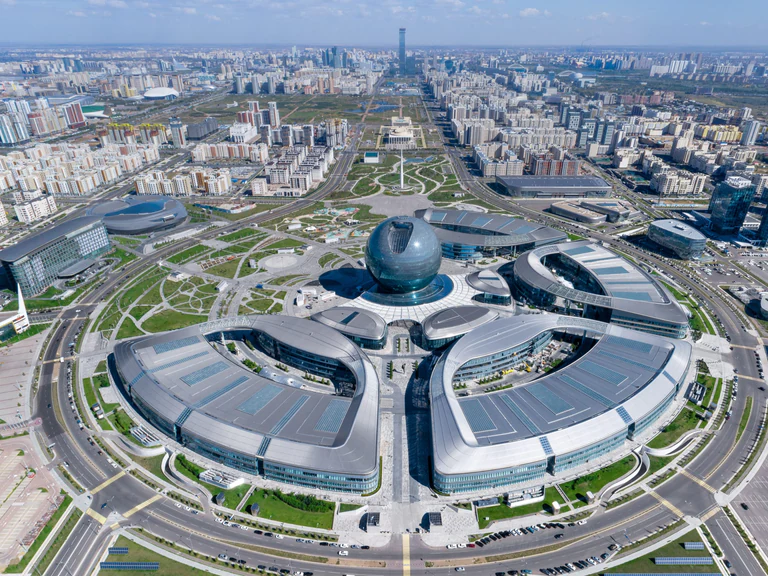
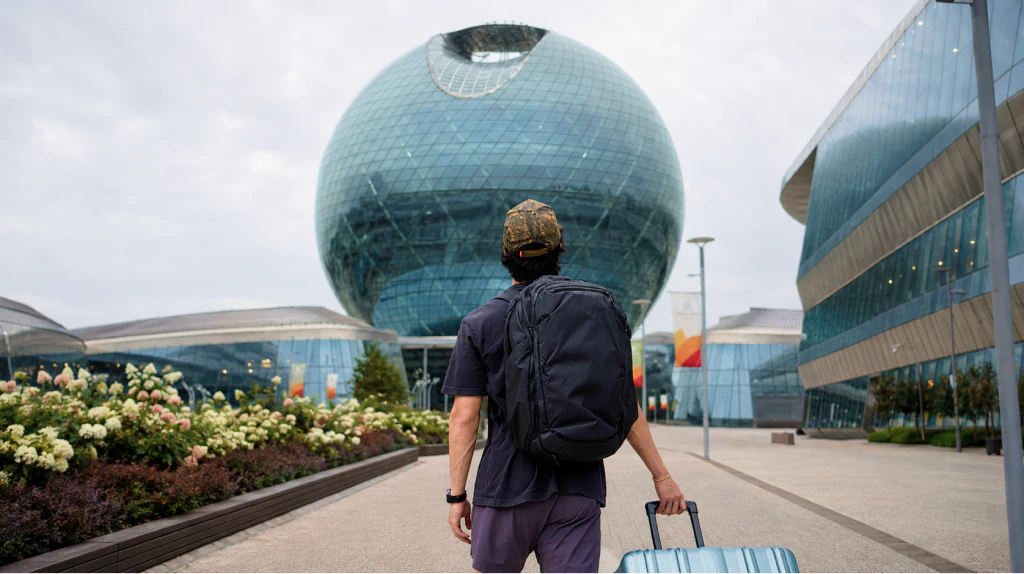
Open full page →Network School is in Astana, Kazakhstan, at Astana Hub, the national technology park on Mangilik El Avenue in the EXPO district of the new city. The campus is on the fifth floor, across the road from the largest mall in Central Asia. Being inside Astana Hub also puts you among the local startups, investors and government tech programmes based in the same park. Astana is Kazakhstan's capital, a planned city on the open steppe built almost entirely since 1997, when the government moved the capital there from Almaty. It is one of the fastest-growing capitals in the world and added well over a hundred thousand residents in 2025 alone. Expect wide boulevards, ambitious modern architecture, good infrastructure and a genuinely extreme continental climate.
Open full page →Fly into NQZ, Nursultan Nazarbayev International Airport. It's the main airport for Astana, roughly 20km from the centre. It is Kazakhstan's second-busiest airport, so there are connections, but rarely direct ones from outside the region: most routes come via Istanbul, Dubai, Frankfurt or Almaty. In winter, leave plenty of time between flights, because snow delays are normal.
Open full page →Ride-hailing is what most people use. It's cheap by European or North American standards and easy to book from your phone. There are city buses, and Astana has been building out rail transit, so check what's running before you rely on it. Walking is pleasant for much of the year and genuinely punishing in deep winter, when a fifteen-minute walk turns into a decision. Most people switch to taxis from November to March.
Open full page →Local SIMs are cheap and widely sold, and mobile data in Astana is fast and reliable. You will normally need your passport to register a SIM, which is standard across the region. An eSIM bought before you fly is the least painful option for your first day, then switch to a local plan once you have found a shop. Note that some international services and apps are subject to restrictions in Kazakhstan, so if a specific tool is critical to your work, verify it before you depend on it.
Open full page →This is the question people get most wrong. For anything from late October to April you need genuine cold-weather kit, not a city coat: an insulated parka rated well below freezing, thermal base layers, insulated waterproof boots with grip, gloves, a hat that covers your ears, and a scarf or neck gaiter. Indoors is heated and warm, so pack normal clothes for daily life and treat the outer layer as equipment. Buying the heavy items in Astana is a reasonable plan. Local shops stock for the real climate, and you can try things on.
Open full page →Astana is a young, deliberately built capital: government buildings, glass towers and broad avenues laid out on flat steppe, with a real city of well over a million people around them. It's clean, orderly and well run, with good restaurants, gyms, malls and coffee. It's also spread out and exposed to the wind, which makes it feel emptier than its population suggests, and the architecture divides opinion sharply. Next to a dense old city it can feel planned. Next to an isolated campus, it's a working capital with everything you need.
Open full page →Almaty is Kazakhstan's largest city and its former capital: older, greener, denser, set against high mountains, with a milder climate and a stronger cafe and cultural scene. Astana is the political capital, newer, flatter, colder and more purpose-built, and it is where the government and the country's technology institutions sit. Network School is in Astana. Almaty is a worthwhile domestic trip and a common weekend or extended-break destination, and the flight between the two is short and frequent.
Open full page →Astana (NQZ) is well connected regionally and poorly connected long-haul. From Europe, expect one stop via Istanbul, Frankfurt or a Gulf hub. From Asia, connections via Dubai, Istanbul or Almaty are common. From the Americas it is a long two-stop journey. More non-stop flights are the main thing Astana still needs. Prices swing widely by season and how far ahead you book, and winter weather makes tight connections risky. Do not book anything non-refundable until your cohort dates and your visa position are both settled.
Open full page →The currency is the Kazakhstani tenge (KZT). Cards work in most places, so you need little cash. Keep some tenge for small vendors, markets and tips. Exchange rates are better in the city than at the airport, and there are plenty of ATMs in central Astana. The tenge moves against major currencies, so any tenge figure on a third-party site is probably out of date. Check a live rate before you budget.
Open full page →Kazakh is the state language and Russian is very widely used in daily life, especially in Astana. English is common among younger people, in tech circles and in international-facing businesses, but it is not a safe assumption with taxi drivers, older shopkeepers or officials. You will get by on English inside the community and with translation apps outside it. Learning a handful of Russian or Kazakh courtesies goes a disproportionately long way, and offline translation on your phone is worth setting up before you arrive.
Open full page →Kazakhstan is further along on crypto than most of the region. It has a regulated regime run through the Astana International Financial Centre, licensed exchanges, and a history as a major bitcoin mining country after miners moved there. So crypto is a normal topic here. Everyday shops still don't accept it, so pay for ordinary things in tenge by card. The rules have changed repeatedly, so check the current position before moving significant funds or setting up anything structural.
Open full page →Yes, formally. Network School signed a five-year memorandum of understanding with Kazakhstan's Ministry of Artificial Intelligence and Digital Development; it was signed by Balaji Srinivasan and Zhaslan Madiyev, Deputy Prime Minister and Minister of AI and Digital Development. The memorandum covers AI education, research, technology entrepreneurship and international talent programmes, and commits both sides to organising conferences, forums and hackathons. Its partners in Kazakhstan include alem.ai, Astana Hub, the Astana International Financial Centre (AIFC), Superteam Kazakhstan, the Alatau City Authority and the Aqmola region. A memorandum is a framework for cooperation. It doesn't guarantee you anything as a member, so confirm any promise about visas or company setup for your own case.
Open full page →Yes. The Astana campus comes with streamlined redomiciliation (moving an existing company's legal home to Kazakhstan), alongside expedited visas and active talent recruitment. International tech companies in Astana have two formal routes: Astana Hub, the national technology park, and the Astana International Financial Centre (AIFC), which runs its own legal system based on common law. Both are Network School partners. Ask directly how the help works in practice, whether that's introductions, paperwork support or a dedicated programme, and what it costs. Redomiciling has tax consequences in the country you leave as well as the one you join, so get proper legal and tax advice before relying on any of this.
Open full page →Astana has a real tech-event calendar, and Network School is part of it. The biggest event is AI & Digital Bridge, the national IT forum, which runs 1–3 October 2026 at the EXPO International Exhibition Centre, and Balaji Srinivasan is speaking there. The first day, 1 October, is invitation-only; the open programme is on 2–3 October. Linked to it is the Astana AI Film Festival, which drew more than 8,000 entries from 125 countries and has a $2 million prize fund, plus a separate $1 million investment fund from Balaji for promising AI teams. Under its agreement with the government, Network School has also committed to organising conferences, forums and hackathons in Kazakhstan, and plans to explore hosting the Network State Conference there. That last one is a plan with no date yet. On campus, guest speakers, workshops and community events are part of the standard membership.
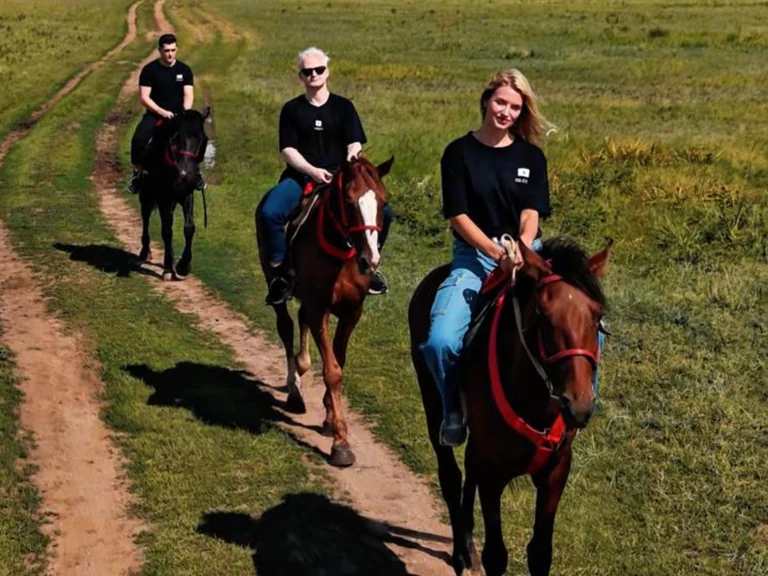
Open full page →Network School had offers from more than ten countries and chose Kazakhstan because it is Singapore with space to build. There are four reasons. Governance: a technocratic, pro-tech state that has set up a Ministry of Artificial Intelligence and is courting international founders. Growth: Astana has gone from roughly 300,000 people in 2000 to close to two million, adding around 100,000 in a single recent year, which is why there are cranes everywhere. Space and nature: unlike Singapore, Dubai or Hong Kong, open country and horseback riding are 30 to 60 minutes from a very modern capital. Immigration: a digital nomad visa and residency built for tech founders. Astana's tech scene was missing international builders who stay longer than a week, and a residential community brings exactly that. The weak point is long-haul flights: there are still too few non-stop connections.
Open full page →It's the three things the place is built around: learn technology, burn calories, and work remotely so you keep earning while you do both. In practice your day has three tracks to choose from: sessions and tutorials on the technical side, training on the fitness side, and long uninterrupted work blocks in the coworking space. Bundling them works because each one is easier to keep up when the other two are already handled and everyone around you is doing the same.
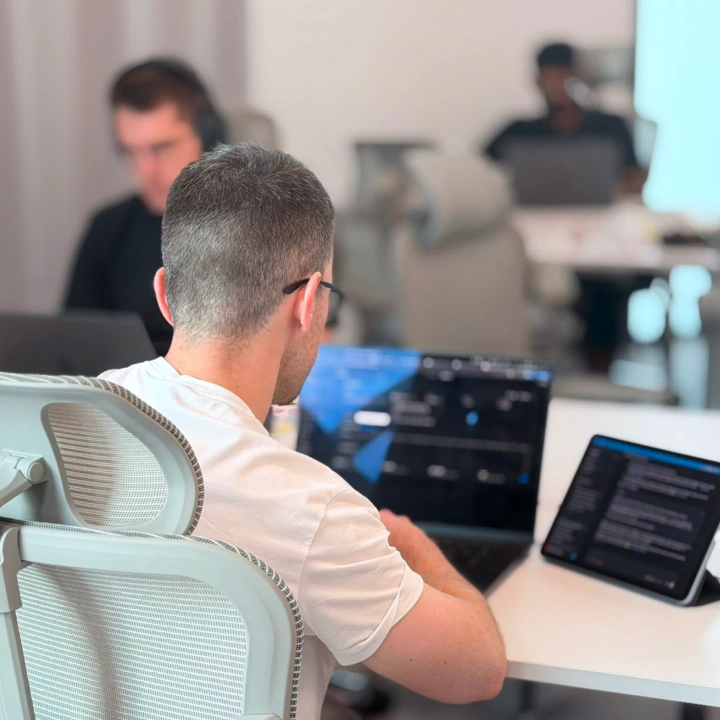
Open full page →There is no imposed schedule, which is the single most important thing to understand. A common shape: train in the morning, eat, work a long block through the middle of the day, drop into a talk or workshop in the afternoon, then dinner and something social in the evening. Because you live where you work, days blur together pleasantly if you are focused and unpleasantly if you are not. The people who get the most out of it decide their own structure in week one instead of waiting for the place to provide one.
Open full page →Not in the usual sense. You don't get a degree, and there's no syllabus, grading or course to enrol in. What you get is a dense calendar of optional talks, tutorials and workshops, plus a few hundred people who know things you don't. The learning is peer-to-peer and self-directed, so if you need a set curriculum and someone holding you to it, the format will frustrate you today. That is changing. Network School is partly a reimagining of the university: classes and courses are being added, and you graduate by passing an exam instead of sitting through years of study, which can take weeks or months. Pass an exam, get a job. The long-term idea is learning spread across your whole life instead of packed into your early twenties.
Open full page →The focus is applied technology: AI engineering above all, plus related areas like crypto, building products and distribution. Sessions range from hands-on tutorials to talks by visiting speakers. The Astana campus was set up alongside Kazakhstan's push into AI and digital development, so expect a strong AI emphasis. There's no fixed list of tracks or curricula for current cohorts, and in practice the calendar reflects who happens to be in the building that month.
Open full page →A cryptocredential is a portable, verifiable record of what you actually completed, issued on-chain as proof of work. It replaces the paper certificate from an institution. It fits the wider thesis: if a society runs on a network, its credentials should live on the network and be checkable by anyone. It isn't confirmed whether they are being issued for current cohorts, or in what form. Don't choose to attend expecting to leave with a specific credential.
Open full page →Most people arrive with income already, from a remote job, a company or freelance clients, and the place is designed around that continuing. Introductions to employers are part of the membership, and that is the most concrete earning route on offer. Beyond that, paid work does circulate among a few hundred builders. Anything more specific, including bounty programmes you may read about elsewhere, is unconfirmed for current cohorts.
Open full page →Network School has run subsidised routes in the past for people who couldn't otherwise afford to attend. There's no fellowship or scholarship programme announced for the Astana cohorts yet. If cost is what's stopping you, ask directly in your application instead of waiting for an announcement. Also look at the exam and placement route, a separate path that can come with free training instead of a fee.
Open full page →Very, by the standards of any normal workplace. A large share of members work in or around crypto, and the network state thesis the place is built on comes out of that world. Expect it to come up in conversation, and expect strong opinions. The emphasis has shifted a lot toward AI, though, and plenty of members have no crypto involvement at all. If you find the whole area distasteful, you'll be in a minority in the room.
Open full page →Membership includes guest speakers, workshops, tech tutorials, fitness classes and community events, plus a content studio for people making video or podcasts. The mix shifts month to month depending on who is in residence and who is visiting. Nothing is compulsory. The practical consequence is that two people in the same cohort can have completely different months, and the difference is usually how much of the calendar they chose to show up for.
Open full page →Most days there's something on: a talk, a tutorial, a class or a community event. How much varies, and none of it is mandatory. Don't plan your month around a fixed daily timetable, and don't assume an empty afternoon means nothing is happening. The schedule is shared internally once you're in, so you can't see the calendar you'll actually live by before you arrive.
Open full page →Meals are included, three a day, and the house style is optimised, health-first eating: clean, repetitive and designed so you don't have to think about it. People who want fuel love it. People who care about variety get bored and start eating out, and Astana has a solid restaurant scene for that. If you have dietary needs, such as vegetarian or halal, ask how they're handled before you pay.
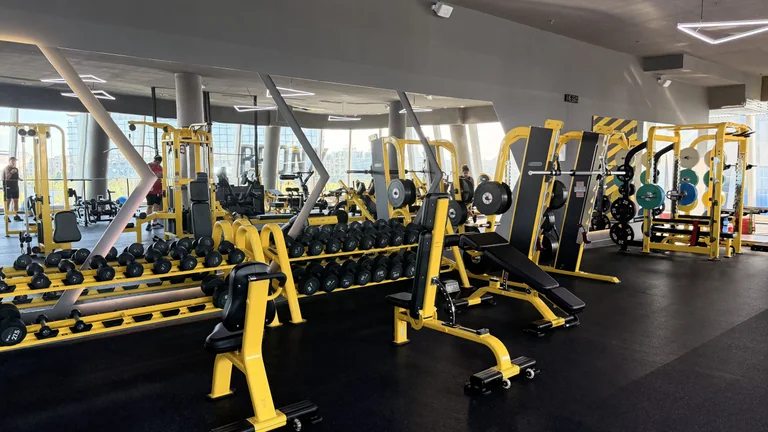
Open full page →Gym access is part of the membership, and fitness is central to the culture: group training is one of the three things the place is built around. The gym is well equipped, with free weights, racks and cardio machines, and there are scheduled fitness classes on top. If you need specific equipment, ask before you arrive. Plan for one thing in particular: outdoor running is impractical for months at a time here, so indoor training stops being optional if you want to stay sane.
Open full page →A fitness-testing event: members train toward a set of measured physical benchmarks and then try them together, like an athletic combine. It gives the training culture something concrete to aim at, which works better than a vague plan to get fitter. It isn't confirmed whether it runs in current cohorts, or in what format. Ask once you're in, and don't build your training plan around it.
Open full page →Indoors, expect the usual gym and class options plus whatever members organise among themselves: pickup games, running clubs, martial arts, or padel and tennis, depending on who is around and what they book in the city. Astana has commercial sports facilities, ice rinks and pools, and winter sports are far easier to get to here than from most tech hubs. Outdoor team sports are seasonal for obvious reasons. Beyond gym access and fitness classes, the membership doesn't guarantee anything specific.
Open full page →The campus is meant as a haven for techno-optimists: a place where people building the future can be around others doing the same, without having to defend the premise. As a description of the atmosphere, it's accurate. The default assumption in the room is that technology is worth building. It isn't a specific facility or programme, so think of it as the culture of the place.
Open full page →Alcohol is legal and freely available in Kazakhstan, and Astana has bars and restaurants that serve it normally. Inside the community, the culture skews toward health optimisation, so drinking is common but not central, and plenty of members do not drink at all. Nobody will pressure you either way. If a heavy drinking scene is what you are looking for in a community, this is not it.
Open full page →This is the question to take most seriously. Astana is one of the coldest capital cities on earth. Deep winter brings daytime temperatures well below freezing and cold snaps down to −30°C or lower, on flat open steppe with nothing to break the wind, so it feels worse than the number. Snow lies from around November into March or April, and December days are short. It's liveable because the city is built for it. District heating keeps interiors genuinely warm, buildings and transport are designed for the cold, and life moves indoors and carries on. The change of season is what catches people out: the ten-minute walk you wouldn't think about in October becomes a decision in January. If you've never lived through a real continental winter, expect it to affect your mood and how often you go out, as well as what you wear.
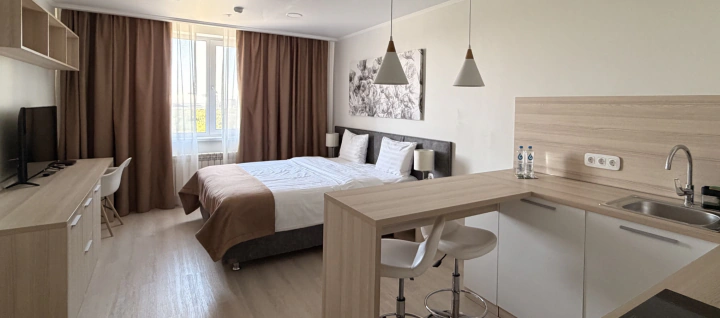
Open full page →A room is included in the membership. That's the model: one price covers where you sleep as well as where you work. Whether $900/month gets you a shared or private room, and what the higher tiers cost, isn't on the price list yet, so ask. Given the climate, ask specifically about heating, window quality and natural light, since daylight is short in winter. Get your room type confirmed in writing before you pay.
Open full page →The whole point is that domestic chores are taken off your plate, and room cleaning and laundry have been part of that before. If it matters to you, ask what's covered at the current campus and how often. Laundry included and a coin machine down the hall sound similar, but over a month the difference gets annoying.
Open full page →Coworking is included and open 24/7, which matters when your colleagues are eight hours behind or ahead. Beyond open desks, ask about call pods, bookable private offices and meeting rooms at the current campus. If you take calls all day, or you're bringing a team that needs its own space, raise it in your application. The membership includes a content studio, the one dedicated space that is confirmed.
Open full page →Wifi is included, and for a community where everyone works remotely it holds everything up. Astana has good fixed and mobile connectivity in general. How fast the campus connection is, and how it copes with a few hundred people online at once, you'll find out on arrival. If your work depends on stable video calls or large uploads, bring a mobile data backup so you're not relying on one connection.
Open full page →This is one of the clearest advantages of being in a capital: you don't depend on the campus for anything. Astana has supermarkets, pharmacies, malls, coffee shops and a genuinely good range of restaurants, including Kazakh, Central Asian, Georgian, Turkish, Korean and European food, along with delivery apps that work well. You won't be waiting for a shuttle to reach a shop: the Astana Hub campus is across the road from the largest mall in Central Asia. In deep winter, the only limit is how far you want to walk.
Open full page →There's no pet policy for the current campus, so assume pets aren't allowed until Network School tells you otherwise. Separately, bringing an animal into Kazakhstan involves veterinary paperwork, vaccination records and import requirements that need arranging well in advance, and a severe winter is hard on some animals. If your pet is coming with you whatever happens, settle it before you apply.
Open full page →Applications go through the Network School site. You submit an application, it's reviewed, and if you're accepted you get cohort dates and payment details. Applying through a referral link gets you your first week free and priority review of your application. Apply before booking anything. Flights and visas come after acceptance and confirmed dates.
Open full page →Your application is reviewed, and if it progresses you're told your cohort dates and what to pay. There's no stated review time, so don't count on a decision the same week. Referral applications get priority review, which moves you up the queue but doesn't change the decision. Use the wait to check your visa position, because that's the step most likely to delay your arrival.
Open full page →The core audience is remote workers, tech founders and content creators, meaning people with location-independent income or a company of their own. In practice that also covers engineers, researchers, designers and writers. There's no formal qualification requirement. Applications are open globally, and anyone from 18 to 80-plus can apply. You just have to be an adult, and children can come with a parent. The two real limits are money, since membership is a monthly fee you need to keep paying, and immigration, since you need a legal basis to be in Kazakhstan for the length of your stay.
Open full page →Nobody outside Network School knows the acceptance rate, so anyone quoting one is guessing. Look at the model instead of the marketing: this is a paid membership with an application filter, not a scholarship competition, so the bar is fit and seriousness. Prestige matters less. A new campus with limited space means early cohorts can fill up, so applying early helps more than polishing your application.
Open full page →No. You can apply directly and be accepted on your own merits. A referral link is a bonus: applying through one gets you your first week free and priority review. It doesn't guarantee acceptance. If you already know a member, mention it, because a real recommendation from someone inside counts for more than any link.
Open full page →Expect to arrive, check in, get your room and access, and be pointed to the calendar and the community channels. Ask for the arrival details for your cohort before you travel. Two things to handle in your first days whatever happens: Kazakhstan requires foreigners to register with the migration authorities within 72 hours of arrival, so confirm whether your accommodation does this for you, and sort out a local SIM or working eSIM straight away. Ask what time you can actually check in. Arriving at 3am into a −25°C night without a plan is a bad start.
Open full page →Alongside membership, Network School runs a separate track that starts with an online exam. The sequence is: take an online exam, come to campus, sit a proctored exam there, then get a job. Successful candidates get job placement help or free training. The aim is to find people who do well a tech job, either in Kazakhstan or remotely online. It's a talent and placement pathway, and most people join as paying members without it, so if you're a remote worker or founder you don't need to pass it. Ask about the format, subjects, cost and eligibility before you prepare for it.
Open full page →The second stage of the talent track: after passing the online exam you come to the Astana campus and sit a proctored exam in person. It's there to check that the person who passed online is the person in the room. Ask what it covers, how long it takes, what it costs and what happens if you fail. It sits outside the standard membership route, so paying members don't need to sit it.
Open full page →There are two routes. Employer introductions are part of the standard membership. The talent track (online exam, campus, proctored exam) is built for job placement: successful candidates get placement help or free training, and the aim is a tech job in Kazakhstan or remotely. Neither comes with placement rates, employer lists or guarantees, so don't count on a job as an outcome of attending.
Open full page →Founders at various stages, engineers, remote employees at technology companies, researchers, content creators and writers. The crowd skews young, late twenties to late thirties, and international. What they share is a disposition more than a job title. In a word, techno-optimists. That includes engineers, content creators, graphic designers, power users and anyone who wants to build a positive future with technology. Families are welcome too. You'll meet a lot of people mid-pivot, between companies, or deliberately taking a year to change direction.
Open full page →Capable people that conventional filters miss: they have no famous employer, elite university or network, and often live in a country where opportunity doesn't reach them. Finding that talent is an explicit part of the thesis, and it's the clearest logic behind an exam-and-placement track, since an exam doesn't care where you went to school. It's also the most attractive idea the project has. Judge it by whether the placement outcomes turn out to be real.
Open full page →Male-skewed, as you'd expect from a community drawn from startups, crypto and engineering. There are no figures for current cohorts, and any specific ratio you see quoted elsewhere is unverified. If a balanced environment matters to you, ask Network School directly. Don't rely on a third-party number, including anything on this page.
Open full page →High-agency, optimistic about technology, health-conscious, and unusually willing to tell strangers what they're working on. Status comes from shipping things. Titles count for little. The flip side is that it can feel uniform in outlook: a room where nearly everyone shares a worldview is comfortable if you share it and tiring if you don't. Cynicism about the project itself doesn't go down well.
Open full page →Yes. Any community of a few hundred people forms groups, and shared language or nationality is the most common dividing line, along with shared work. That's normal, and it's easy to get around, because the calendar of shared activities gives you a reason to mix. If you arrive alone and wait to be adopted, it'll be slower going than if you host something in your first week.
Open full page →It has a thesis, and the thesis is political whether or not it is party-political: that networks can provide the functions of a society, and that people should be able to choose the community they belong to. Expect libertarian-leaning and techno-optimist views to be well represented. The community itself is more interested in building than in arguing about elections, so it is less politically charged day to day than the founding ideas suggest. Note also that you are a guest in Kazakhstan, and discretion about local politics is simply good manners.
Open full page →You need a legal basis to be in Kazakhstan for the length of your stay, and which one depends on your passport. Many nationalities get 30 days visa-free, which covers a single cohort but not a long stay. Others need an electronic or consular visa. For longer stays there are dedicated digital nomad routes. Whatever your situation, one duty applies to everyone: registering with the migration authorities within 72 hours of arrival. Visa rules change, so check your own case with the Kazakhstan Ministry of Foreign Affairs and treat any third-party summary, including this one, as a starting point.
Open full page →Very possibly. Kazakhstan's visa-free list covers dozens of countries, and most eligible travellers get 30 days, with a cap on total days in any 180-day period. Thirty days lines up neatly with a single monthly cohort. A two-month stay needs planning. Check your own nationality and the current day limits with the MFA, because both the list and the caps change.
Open full page →Kazakhstan has a digital nomad route for remote workers, the Neo Nomad visa, with an income requirement of around $3,000 per month and validity of up to two years. There's also a separate digital nomad residency for IT professionals with a much longer horizon. Both require your income to come from abroad, not from Kazakh companies. Astana Hub developed the programme, and it's aimed squarely at the tech founders, creative entrepreneurs and innovators who come to Network School. For one cohort, visa-free entry is simpler. If you plan to base yourself in Astana for months, look into this route early, because it takes time. Check current requirements with the MFA before relying on any figure here.
Open full page →If your nationality isn't covered by visa-free entry, Kazakhstan issues electronic visas in several categories. The catch that surprises people is that a tourist e-visa can require an invitation from a licensed Kazakh tour operator. That's an extra step and an extra cost on top of the online form. Don't assume you can sort an e-visa the week before you fly. Start early and check the current requirements for your category with the MFA.
Open full page →Yes. Foreigners in Kazakhstan must register their place of stay with the migration authorities within 72 hours of arrival. Hotels and formal accommodation usually handle this automatically. If yours doesn't, the obligation is still yours, and missing it can mean fines or trouble when you leave. Ask Network School whether registration is done for you on arrival, and get the answer before you fly. Day three is too late to find out.
Open full page →Be careful with this one. Kazakhstan's visa-free regime typically caps total days within a rolling 180-day period, so leaving and coming back doesn't necessarily reset your clock the way it does in some countries. A short trip abroad can use up the days you have left. If you want to stay longer than your visa-free window, the proper answer is a long-stay route such as the nomad visa, not repeated border crossings. Check the current rules with the MFA before planning any trip that assumes a reset.
Open full page →Yes, and don't treat it as a formality. Health insurance isn't included in the membership, and some visa categories require proof of cover. Get a policy that covers you in Kazakhstan for your whole stay, including medical evacuation, and check it covers any training or sport you plan to do. Winter injuries, above all slips on ice, are the most likely reason you'll need it.
Open full page →Astana is a capital city with public and private hospitals, clinics and pharmacies, and private clinics are the usual choice for foreigners wanting English-speaking care. Standards in the private sector are reasonable for routine problems. For anything complex or specialised, people generally travel, which is another reason to hold insurance that includes evacuation. Bring an adequate supply of any prescription medication you depend on, and check its legal status in Kazakhstan before you travel, since rules on specific drugs vary.
Open full page →Life at Network School
Real moments from the community

Resident guides
In-depth guides written from firsthand experience at Network School.
How to travel to Network School: getting to Astana in 2026
One airport, no direct flights from most of the world, and a winter that reroutes plans. Here is how to actually get to Astana, Kazakhstan.
Read guide →Network School rooms and accommodation: what to expect
A room is included in the membership. What to confirm before you pay, and the questions that only matter in a cold climate.
Read guide →Activities and events at Network School: how a month actually fills up
Talks, workshops, training and a content studio, and all of it optional. That is why two people in the same cohort can have completely different months.
Read guide →Ready to join Network School?
Applications for Astana, Kazakhstan are open. Apply through this link and get your first week free.
Apply now, first week free